Although the latest figures from the Office for National Statistics show new construction work has dropped this year, scaffolding work isn't dependent on construction output. In our experience, opportunities are out there; you just need to sharpen your focus.
In our area, London and the South East, demand is strong for scaffolding for refurbishment, façade remediation, infrastructure, and maintenance work. London also has an enormous building and infrastructure estate that continually needs maintenance, upgrades, and adaptations.
Long-term infrastructure opportunities
Infrastructure is arguably one of the most interesting areas for the scaffolding sector, and one where we have vast experience.
The London Infrastructure Framework prioritises 51 projects across transport, energy, waste, water, flood risk, and digital connectivity. This is positive news for specialist access and scaffolding companies like Millcroft. But these are all future projects, with no start dates yet.
So, in the meantime, we need to look beyond new build. For us, opportunities lie in London's ageing infrastructure, which requires ongoing maintenance and renewal. That means projects on the railways and stations, utilities, and energy infrastructure where we have a solid track record.
For example, at Tideway East, part of London's 'super sewer', we designed a bespoke scaffolding solution with stair access towers and containment to remove tunnel boring machines safely.
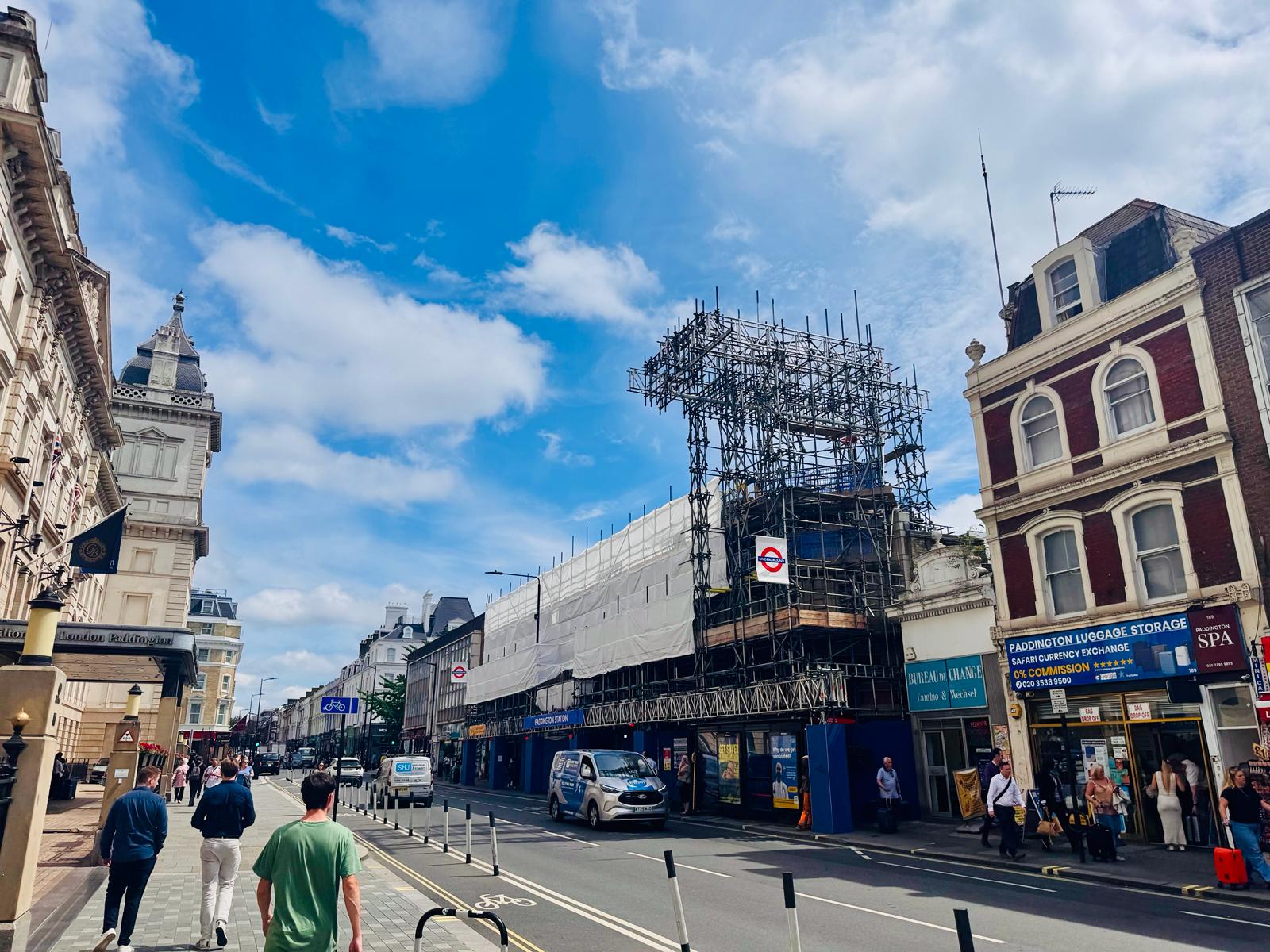
We also have extensive experience on complex rail and transport projects, like HS2, including the Colne Valley Viaduct, the Whitechapel regeneration, and Paddington station, where planning, in-house design expertise, as well as collaboration with other project teams have been fundamental to successful delivery.
Refurbishment and maintenance remain important
London's building stock is vast and is ageing, so it needs constant attention. Façade repairs, roof replacement, external decoration, window replacement, stonework and brickwork, waterproofing, balcony repairs, structural repairs, and fire-safety remediation are constantly needed. Our work at Blashford Tower, as well as on TfL’s properties above Baker Street Station, and at Westgate Apartments near London’s ExCel, are good examples of the broad nature of these projects.
At Blashford Tower, we provided a suspended logistics gantry and distribution route for the recladding and fire safety works at the 20-storey building. Erecting a suspended gantry on a slope by Network Rail tracks added complexity, as our scaffold design required full Network Rail approval.
For our project above Baker Street Station, our team provided safe access and scaffolding solutions as part of repair works to TfL-owned buildings above the station. The concern here was the safety of workers as well as pedestrians and traffic on the busy London streets below. Our solution was a fan cantilevered off the wall to contain any falling debris.
At Westgate Apartments near London's Excel Arena, Millcroft was called in after glass balustrades fell from upper floors, creating a public risk. Working with the client's structural engineer, we designed a multi-tiered scaffolding solution incorporating protection decks. Where site restrictions made a high-impact protection deck impractical, a full-height independent scaffold provided protection from falling debris and safe access for the public and subsequent works.
The real challenge isn’t the pipeline
As you can see, if you adapt your strategy and don’t focus solely on new work, there are plenty of scaffolding projects.
So, if the amount of work isn't the problem, what is?
Margins are being squeezed by labour shortages, increasing costs and increasingly demanding compliance requirements.
One major issue has been around for several years: a shortage of skilled labour. The National Access and Scaffolding Confederation's (NASC) Skills Gap Report 2026 shows that NASC members currently have around 1,760 vacancies and expect almost 6,000 openings this year.
Worryingly, NASC estimates the industry could have around 40,000 vacancies once retirements and normal staff turnover are factored in.
Experienced scaffolders, supervisors, managers, and designers are essential for complex infrastructure and facilities projects. So, as an industry, we need to keep investing in apprenticeships, training, and career development to attract and keep the talent of the future.
Costs are another challenge. Scaffolding is a logistics-heavy industry. We need to keep our yard well stocked and move equipment to and from sites across the capital, and beyond. And that's not cheap. Rising fuel costs, congestion charges and ULEZ compliance for our vehicles all add up. Add the extra planning needed to get equipment to tight, access-restricted city sites, and even the most straightforward project can prove time-intensive and costly.
And then there's compliance, which has only become more demanding. CDM 2015, industry design standards, CISRS card requirements and the audit processes require a lot of documentation for every scaffold we put up. It's necessary; this is a safety-critical industry, but it means more time, more training investment, and more administrative overhead than it used to, especially for firms trying to scale.
Where does this leave us?
The pipeline is there, and the need for skilled, dependable contractors is also there.
Buildings and infrastructure will always need maintaining, repairing, and upgrading, and major investment in transport, energy, water, and other infrastructure will continue to provide long-term opportunities. London and the South East will keep generating scaffolding demand for years to come, whatever the wider economic situation.
But that's not enough. We need to address the pressures and additional costs imposed on our projects. And crucially, we must tackle the skills shortage and keep promoting scaffolding as a rewarding and secure career.
The businesses that come out ahead will be the ones who can resource it, finance it, comply with it, and deliver it. Consistently.